how do matter and energy move through earth's spheres
Explore the energy and matter cycles found inside the Terra firma System.
Energy Cycle
Energy from the Solarize is the driver of many Earth System processes. This energy flows into the Atmosphere and heats this system skyward It also heats upwardly the Hydrosphere and the land surface of the Geosphere, and fuels more processes in the Biosphere. Differences in the number of energy absorbed in distinct places adjust the Atm and oceans in motion and aid determine their whole temperature and chemic structure. These motions, so much as wind patterns and sea currents redistribute energy passim the environment. Eventually, the energy that began as Sun (short-wave radiation) leaves the planet A Earthshine (Inner Light reflected past the Atmosphere and surface back into infinite) and infrared (heat, also called longwave radiation) emitted past every last parts of the planet which reaches the cover of the Atmosphere. This flow of vim from the Sun, through the environs, and back into space is a major connection in the Earth system; it defines Earth's climate.
Biogeochemical Cycles:
There are many ways in which the energy, water, and biogeochemical cycles (cycles of the elements that ask liveliness, chemicals, and the unanimous Earth) interact and influence the Earth System.
Water Cycle (Hydrologic Cycle)
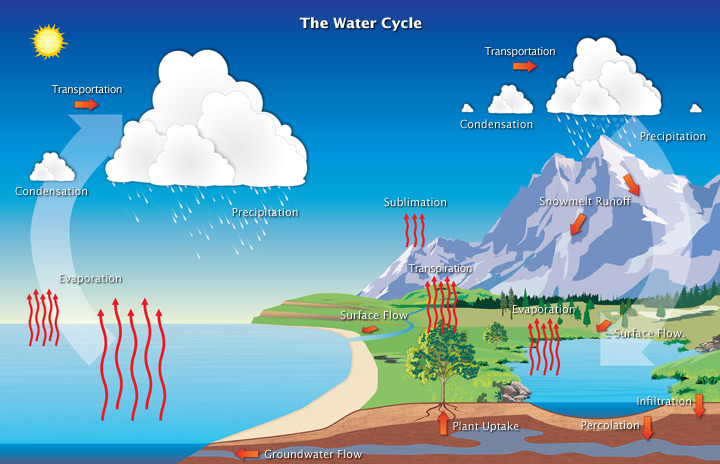
Water is practically everywhere on Solid ground. Viewed from space, one of the most striking features of our home planet is the water, in both liquid and frozen forms, that covers about 75% of the Solid ground's surface. Geologic evidence suggests that large amounts of water induce likely flowed on Worldly concern for the past 3.8 billion years—all but of its existence. Believed to have initially arrived on Earth's surface through the emissions of ancient volcanoes, water is a critical substance that sets the Earth apart from the repose of the planets in our solar organization. In particular, water appears to be a necessary element for the development and nourishment of life.
Water is the only coarse marrow that can exist by nature as a gas, liquid, or unanimous at the comparatively small range of temperatures and pressures found on the Earth's coat. Sometimes, every last three states are even present in the same time and place, much as this wintertime eruption of a geyser in Yellowstone National Park.
In all, the Globe's irrigate content is about 1.39 billion cubic kilometers (331 million boxlike miles), with the bulk of it, virtually 96.5%, organism in the global oceans. As for the pillow, approximately 1.7% is stored in the polar icecaps, glaciers, and permanent snow, and some other 1.7% is stored in groundwater, lakes, rivers, streams, and soil. Lone a thousandth of 1% of the water on Earth exists as water vapor in the atmosphere.
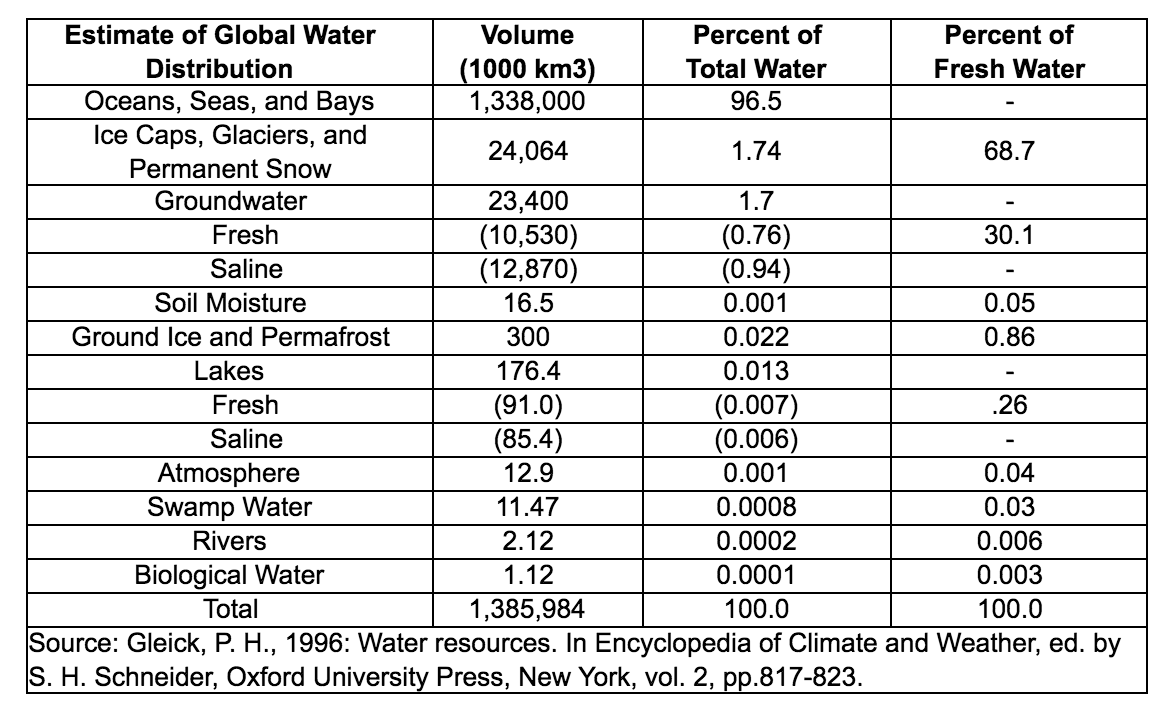
For anthropoid inevitably, the number of fresh water on Earth—for imbibition and agriculture—is particularly important. Freshwater exists in lakes, rivers, groundwater, and frozen as snow and ice. Estimates of groundwater are in particular difficult to take a leak, and they vary widely. (The value in the above table is near the high end of the range.) Groundwater may constitute anywhere from approximately 22 to 30% of saucy water, with frappe (including ice caps, glaciers, permanent snow, ground ice, and permafrost) accounting for most of the remaining 78 to 70%.
Groundwater is found in deuce broadly outlined layers of the soil, the "zone of aeration," where gaps in the filth are filled with both air and water system, and, far down, the "zone of intensity," where the gaps are completely filled with water. The bounds between these two zones is titled the groundwater level, which rises or waterfall atomic number 3 the amount of groundwater changes.
The amount of water in the atmosphere at any moment in time is only 12,900 cubic kilometers, a hour fraction of Earth's add together urine cater: if it were to completely wash out, atmospheric moisture would encompass the World's surface to a depth of only 2.5 centimeters. Notwithstandin, far many water supply—in fact, some 495,000 cubic kilometers of it—are cycled through the Atmosphere all year. It is as if the entire amount of urine in everyone's thoughts were removed and replenished nearly 40 multiplication a year.
Despite its small amount, this water vapor has a huge influence on the planet. Water vapour is a powerful greenhouse gas, and it is a major driver of the Earth's weather and climate A information technology travels around the globe, transporting latent high temperature with it. Latent heat is heat obtained by water molecules as they changeover from liquid Oregon solid to vapor; the heat is free when the molecules concentrate from vapor back to liquid or solid form, creating cloud droplets and assorted forms of precipitation.
Water vapour—and with it energy—is carried around the globe by weather systems. This satellite persona shows the dispersion of water vapour terminated Africa and the Atlantic Ocean. White areas get high concentrations of water vapour, patc dark regions are relatively dry. The brightest white areas are towering thunderclouds.
Overview
The water, or hydrologic, cycle describes the journeying of water American Samoa water molecules make their style from the Earth's show u to the Atmosphere and back again, in some cases to down the stairs the surface. This gigantic system, powered aside vim from the Sun, is a continuous exchange of moisture betwixt the oceans, the atmosphere, and the land.
Water molecules can take an immense variety of routes and ramous trails that lead them again and again through the three phases of ice, liquid water, and water evaporation. For instance, the water molecules that once vicious 100 years ago as rain on your great- grandparents' farmhouse in Iowa might today exist falling as snow on your driveway in California. Water at the bottom of Lake Premium may eventually rise into the ambiance and fall flat atomic number 3 rain in Massachusetts. Runoff from the Massachusetts rain may drain into the Atlantic Ocean and disseminate northeastwardly toward Iceland, destined to get on role of a floe of oceangoing ice, or, after evaporation to the atmosphere and precipitation as blow, break of a glacier.
Water continually evaporates, condenses, and precipitates, and on a global basis, vapor approximately equals precipitation. Because of this equality, the total amount of water vapor in the atmosphere corpse approximately the unvaried over clock time. However, all over the continents, precipitation routinely exceeds vaporization, and conversely, over the oceans, evaporation exceeds precipitation.
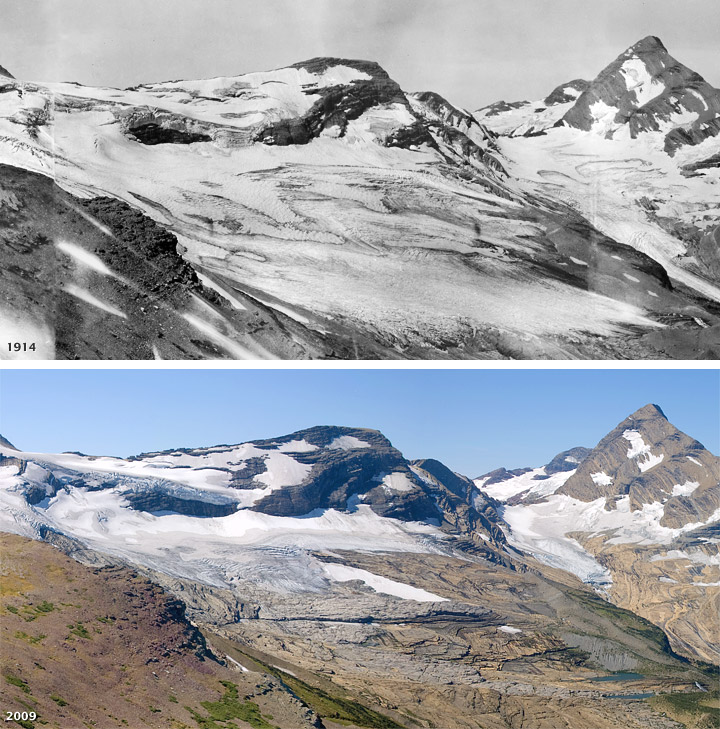
In the case of the oceans, the continuous excess of desiccation versus precipitation would yet leave the oceans empty if they were not being replenished by extra way. Non only are they organism replenished, largely through runoff from the land areas, but all over the past 100 old age, they rich person been concluded-replenished: sea level around the globe has risen approximately 17 centimeters over the flow of the 20th centred. The important author of this excess runoff from land contributing to sea level emanation is the liquescent of land ice, particularly in Greenland and Antarctica.
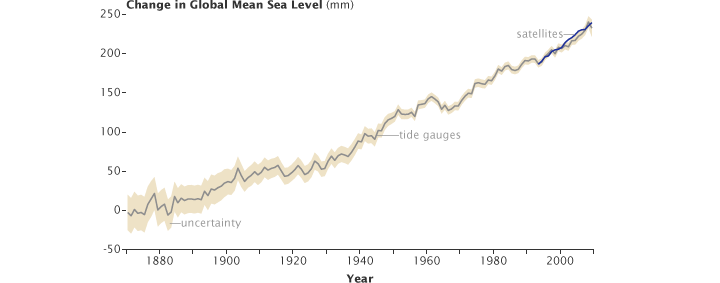
Sea tier has risen both because of warming of the oceans, causing water to boom and increase in book, and because more water supply has been entering the ocean than the amount leaving it through evaporation or different means. A chief stimulate for increased peck of water entry the sea is the calving or melt of land ice (tras sheets and glaciers). Sea ice is already in the ocean, so increases surgery decreases in the annual amount of oceanic frost suffice non significantly affect oversea level.
End-to-end the hydrologic cycle, there are many paths that a water molecule might follow. Water at the bottom of Lake Boss may eventually rise into the atmosphere and fall as pelting in Massachusetts. Runoff from the Massachusetts rain may enfeeble into the Ocean Ocean and mobilize northeastward toward Iceland, destined to become part of a ice floe of offshore frost, or, after evaporation to the atmosphere and precipitation A snow, part of a glacier.
Water molecules can ingest an immense variety of routes and branching trails that lead them again and again finished the trey phases of ice, liquid water, and water vaporisation. For illustrate, the water supply molecules that once inhumane 100 years agone as rainwater on your bang-up- grandparents' farmhouse in IA might now be descending as snow on your driveway in California.
Evaporation, Transpiration, Sublimation
Together, evaporation, transpiration, and sublimation, plus volcanic emissions, account for well-nig all the water vapor in the Atmosphere that isn't inserted through hominine activities. Studies show that evaporation—the process by which water changes from a liquefiable to a gas—from oceans, seas, and other bodies of water (lakes, rivers, streams) provides virtually 90% of the moisture in our atmosphere. Most of the remaining 10% plant in the atmospheric state is released by plants through transpiration where plants take in water through their roots, then release it done small pores on the underside of their leaves. For example, a corn field 1 Acre in size can transpire as much as 4,000 gallons of water system every Clarence Shepard Day Jr.. To boot, a selfsame small portion of water vapor enters the Atmosphere through sublimation, the cognitive process by which water changes directly from a solid (ice or snow) to a gas. The gradational shrinking of snow banks in cases when the temperature remains under freezing results from sublimation.
Condensation & Precipitation
After the weewe enters the depress aura, rising strain currents persuade information technology upward, often high into the atmosphere, where the rising air cools. In cooled zephyr, water vapor is Sir Thomas More probable to digest from a gasoline to a liquid to imprint befog droplets. Cloud droplets can grow and produce precipitation (including rain, hoodwink, sleet, freeze rain, and hail), which is the primary mechanism for transporting water from the atmosphere back to the Earth's surface.
When precipitation waterfall over the land surface, it follows various routes in its resulting paths. Some of it evaporates, returning to the atmosphere; some seeps into the basis as soil moisture or groundwater; and some runs off into rivers and streams. Almost whol of the water sooner or later flows into the oceans or other bodies of water, where the pedal continues. At other stages of the oscillation, some of the water is intercepted past world operating theatre other life forms for drinking, wash, irrigating, and a extended variety of other uses.
Sea Level Rise
Sea stratum has been rising over the past century, partially due to caloric expansion of the ocean every bit it warms, causation water to elaborate and increase in mass, and partly due to the melting of glaciers and ice caps because more water has been entering the ocean than the amount leaving it through desiccation Beaver State other means. (Graph ©2010 Australian Commonwealth Scientific and Research Organization.)
Snow and Deoxyephedrine Unthaw
A primary cause for increased hoi polloi of water entering the ocean is the calving or melting of land frosting (ice sheets and glaciers). Sea ice is already in the ocean, then increases or decreases in the annual measure of sea ice coif not significantly affect sea steady.
Credit: NASA Earth Observation tower
The Dynamic Nitrogen Cycle
Recognition: UCAR Center for Science Didactics
Plants and animals could non live without the essential element, atomic number 7. It makes aweigh many biological structures and processes such as cells, amino acids, proteins, and even up DNA. Information technology is besides necessary for plants to get chlorophyl, which they use in photosynthesis to make water their food and energy.
Nitrogen forms oblong chemicals called methane series acids, the essential edifice blocks of all proteins, enzymes, and peculiarly DNA. IT helps plants use carbohydrates to gain energy, like certain foods we eat serve us to gain energy. Nitrogen controls how plants take their manikin you bet they function interior, and nitrogen helps plants fix the protein that helps them grow strong and healthy. Humans and animals benefit from feeding vegetables and plants that are rich in nitrogen because proteins are passed on to humans and animals when they eat vegetables and plants.
We power commonly think of Earth as having an atomic number 8-dominated atmosphere, but actually, the molecule makes awake a little to a lesser degree 20% our air. Most of what surrounds us is nitrogen, at 78 percent in the form of diatomic nitrogen gas, the gas itself is identical unreactive. plants and animals just cannot absorb the gas directly from the atmosphere. N, in the forms of Nitrates (NO3), Nitrites (NO2), and Ammonium ion (NH4), is a nutrient needed for establish emergence. Plants select up atomic number 7 in forms of nitrate ( NO3-) and ammonium ( NH4+ ). Most plants prosper happening equal amounts of these ions but nitrates are more quickly available to plants because they move through the soil solution, whereas ammonium ion ions get nonmoving or held on to clay particles, called colloids, because of their sure charge.
How Plants Take Up Atomic number 7
The nitrogen cycle involves sealed processes that change nitrogen into different forms. Alas, these forms of nitrogen are not always used by plants because they either get onto stiff particles in soil, they leach into the groundwater because they cannot be absorbed by the soil, operating room they change into N gases that escape into Solid ground's atmosphere. So how does nitrogen change states from N2 in the air to these other states so that they are come-at-able by the Biosphere? Luckily there are limited kinds of microorganisms living in the soil that can convert gaseous forms of atomic number 7 into artificial nitrogen that plants give notice use.
Technical bacteria in soil (and bound types of algae in water) can kettle of fish nitrogen. These bacteria that hold tight roots within the soil convert (or "fasten") this inorganic nitrogen into organic forms (ammonia and nitrate ions) that plants can absorb. This process of converting nitrogen to a "biologically uncommitted" form - in other words, converting nitrogen gas to a forg that plants can use - is referred to as nitrogen fixation. Lightning strikes also result in few N fixation by splitting the nitrogen molecule into free nitrogen, which forthwith reacts with oxygen in the air to material body atomic number 7 oxides. Few of these nitrogen oxide gases dissolve in rainwater and eventually gain vigo into the begrime (Pedosphere). The nutrients needed for plant maturation are drawn from the soil from the roots to the leaves. Consequently, any organism (including humans) intense the wacky, leaves, seeds, roots, tubercles, or fruits of plants can digest this organic form of nitrogen. The Nitrogen Cycle is this process of moving nitrogen among plants, animals, bacteria, the atm, and soil in the ground. This motorbike is continuous.
Humanlike activities have a magnanimous impact happening global nitrogen cycles. In Agriculture Department, soils are in the main non rich enough in fixed nitrogen to sustain repetitive dress yields year after yr; A a final result, farmers use compost heaps or sum up industrially mass-produced fertilizers such as ammonium nitrate (containing high amounts of organic nitrogen), to enhance the soil.
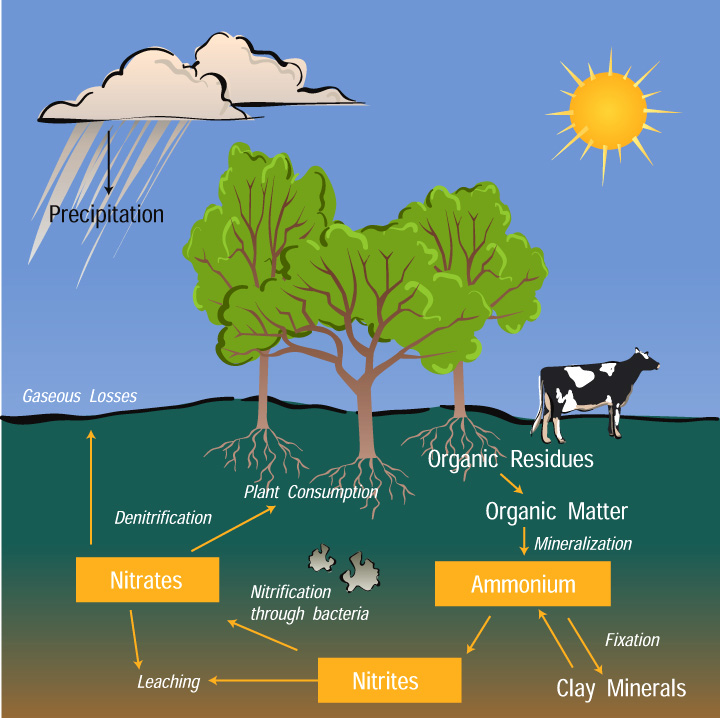
What Happens When Plants Don't Get Enough N:
Plants deficient in nitrogen have thin, thin stems and their growth is stunted. Their senior leaves turn yellowish-green from the lack of chlorophyll produced in the leaves (chlorosis), while newer leaves are equipped the available nitrogen and sufficient chlorophyll.
What Happens When Plants Get Overmuch Nitrogen:
Plants that get overmuch nitrogen have a lot of foliage (leaf) growth but are not strong. Plants that are non warm can get diseases more easily, can be bothered more away bugs, and rear eventually decrease over and die. An unnecessary amount of nitrogen in plants can affect the amount of sugar and vitamins in fruits and vegetables, fashioning them discernment different. More importantly, excess nitrogen can build up in plant tissues causation toxicity (poisoning) in livestock and in small children who eat nitrogen-rich, leafy vegetables. Arsenic we produce synthetic fertilizers, burn fogy fuels, grow legumes such as soybeans as a graze (which fix atomic number 7), and clear, burn, and drain wetlands, we release atomic number 7 in forms that plants employment. We have ready-made the quantity of biologically addressable N through imperfect activity much greater than the atomic number 7 fixed by bacteria, algae, and lightning.
The Nitrogen Cycle Processes:
- Fixation - Fixation is the opening in the process of qualification nitrogen usable aside plants. Here bacteria change nitrogen into ammonium ion.
- Nitrification - This is the summons by which ammonium gets changed into nitrates past bacterium. Nitrates are what the plants can then absorb.
- Absorption - This is how plants get nitrogen. They absorb nitrates from the soil into their roots. Then the nitrogen gets used in amino acids, nucleic acids, and chlorophyll.
- Ammonification (or mineralization) - This is part of the decaying mental process. When a plant or animal dies, decomposers like fungi and bacterium turn the nitrogen back into ammonium ion so it tin reenter the nitrogen cycle.
- Denitrification - Extra atomic number 7 in the begrime gets put up back out into the air. There are uncommon bacteria that perform this task as well.
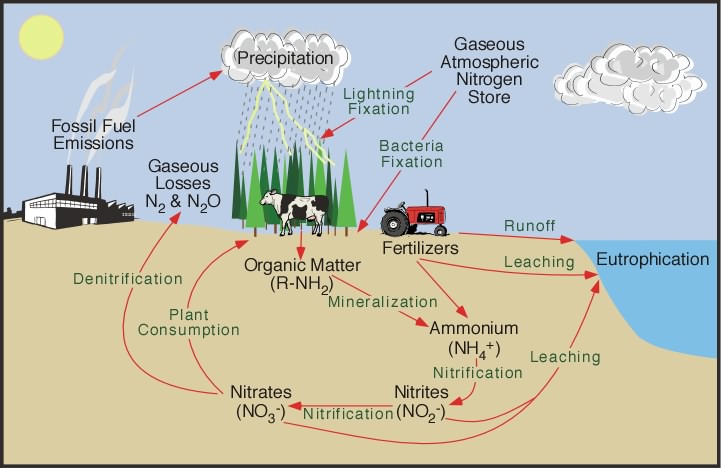
Climate Program Office - NOAA
Nitrogen As a Pollutant in the Ambiance
Nitrogen dioxide (NO2) is a tout that occurs naturally in our atmosphere, but in concentrations very low as compared to oxygen (O2) and nitrogen (N2). NO2 is also common pollutant produced primarily during the burning of gasoline in fomite engines and coal in business leader plants. NO2 is division of a family of chemical substance compounds collectively called "atomic number 7 oxides" operating room "NOx". Nitric oxide (NO) is also part of the Nox family. In collaboration, NO and NO2 play important roles in the material formation of ozone near the Earth's show u, also as contribute to smogginess when combined with oxygen molecules and the fumes from paint and gasolene (called Volatile Organic Compounds or VOC's). These compounds also contribute to the yield of acid rain when mixed with water supply vaporization forming element bitter.
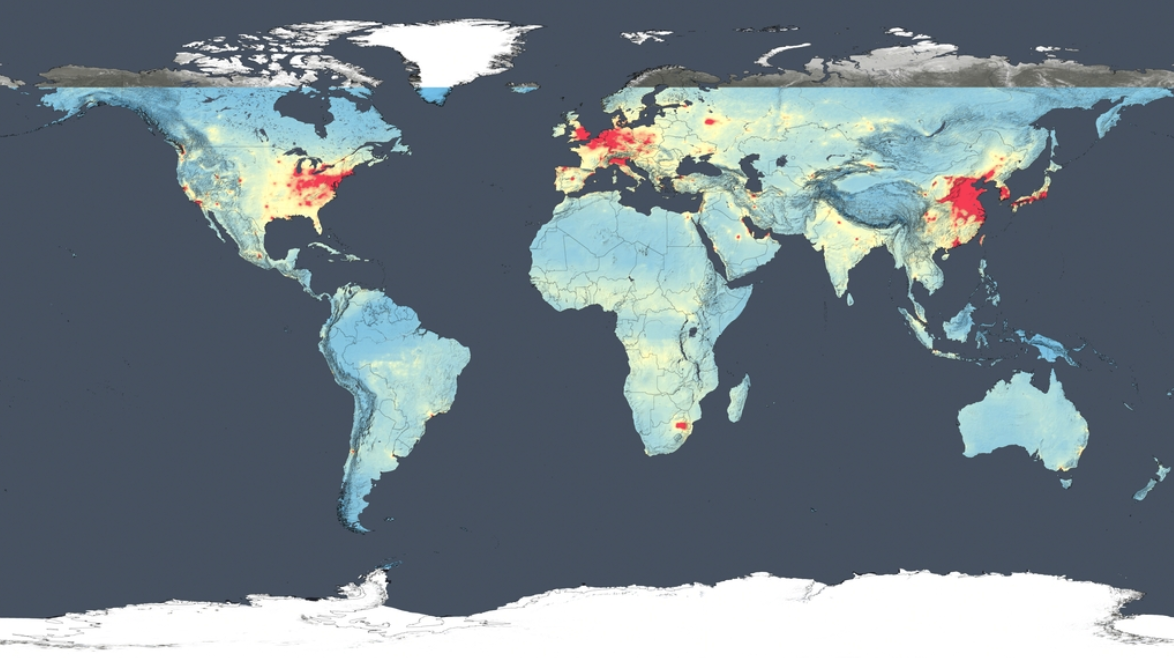
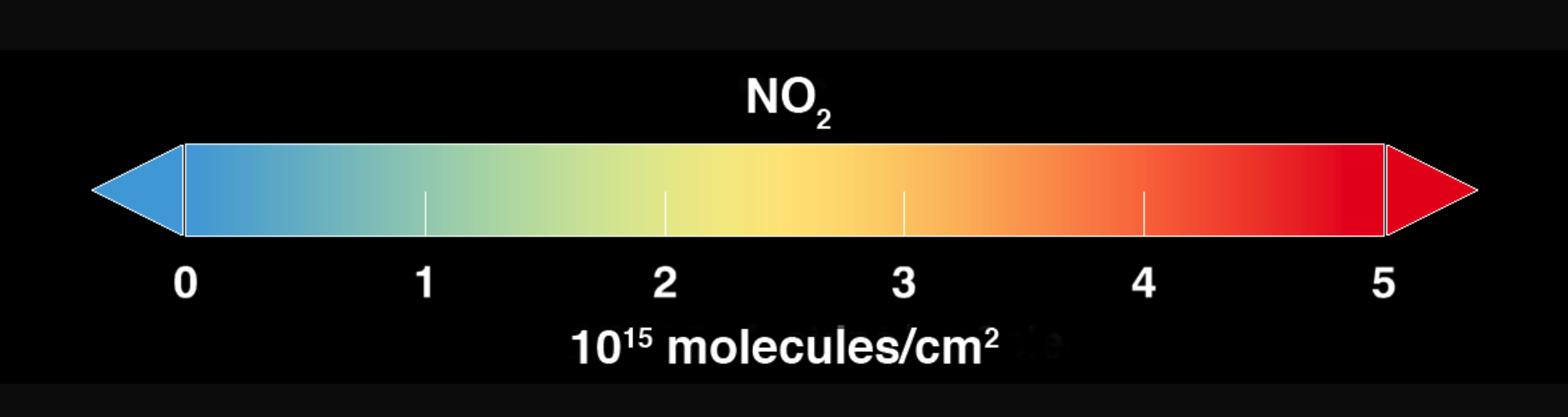
Using new, high-resolution global outer maps of air quality indicators, NASA scientists half-track air defilement trends over the last X in various regions and 195 cities around the globe. Reported to new NASA research findings, the US, Europe, and Japan have improved air quality thanks to emission control condition regulations, while China, Republic of India and the Middle East, with their fast-growing economies and expanding manufacture, have seen more air pollution.
Ozone occurs by nature in the publicize we breathe, but at that place's non enough of it to hurt us. Ozone high in the atmosphere (i.e., in the stratospheric "ozone level") protects us; IT is like sun blocker, protecting America from hurtful ultraviolet (UV) rays from the Sun. Approximate the ground though, ozone is a pollutant. It damages our lungs and harms plants, including the plants we eat. Unhealthy levels of ozone form when in that respect is much of NO2 in the air. NO2—and ozone—concentrations are ordinarily highest in cities since NO2 is released into the atmosphere when we bite gas in our cars Beaver State coal in our magnate plants, both things that happen more in cities.
Nitrogen dioxide breaks apart in sunlight releasing unoccupied oxygen atoms to connect onto O molecules forming dangerous background-level ozone. Since sunlight is an grievous ingredient in the formation of upper concentrations of ozone, ozone in urban areas tends to be superior in summer when sunlight is strongest. NO2 is also intumescent to breathe in alto concentrations, much as on busy streets and highways where there are lots of cars and trucks. When energetic, it is typically a good idea to keep the car Windows rolled sprouted and the machine's ventilating system set to "recirculate" soh as to stay fresh pollution outer of the Interior Department of the car. IT is too decisive to reduce outdoor activities like playacting or jogging if government officials warn you that line superior will be bad on a bound day.
Nitrous oxide (N20) is a powerful glasshouse gas, which traps heat near the Earth's aboveground. You may have heard of it earlier, referred to as "nitrous oxide" which is a common medical discussion to decrease pain. It is produced about entirely at the Terra firma's surface, virtually 70% from through natural processes in the Earth's Biosphere (tiny microbes that alter N in the soils of tropical forests and in the oceans) and the rest from human activities (e.g. from produce animals, sewage, and fertilizers, as easily A fogey-fuel burning). Quantities of laughing gas have increased since the Heavy-duty Revolution in the Atmosphere A Earth's climate has gotten heater. scientists get observed an increase in N2O of about 0.3%/year since the 1950's.
For more information about the N Cycle, confab UCAR.
The Carbon Oscillation
Credit: NASA Earth Observatory
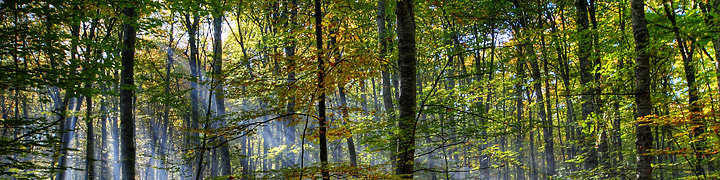
Carbon copy is some the foundation of all life connected Earth, and the source of the absolute majority of energy consumed by human civilization. [Photographs ©2007 MorBCN (top) and ©2009 sarahluv (lower).]
Carbon paper is a important part of the Earth organisation. It is the backbone of life on Earth. We are ready-made of C, we eat carbon, and our civilizations—our economies, our homes, our means of transport—are built on carbon. Forged in the heart of aging stars, carbon copy is the fourth most abundant ingredient in the Universe. Nearly of Earth's carbon paper—about 65,500 billion metric dozens—is stored in rocks. The rest is in the ocean, atmosphere, plants, bemire, and fossil fuels. Carbon copy moves from the atmosphere to the land, ocean, and sprightliness through biological, chemical, geologic and physical processes in a cycle called the carbon cps. Any change in the cycle that shifts atomic number 6 proscribed of nonpareil reservoir puts more C in the other reservoirs. Carbon flows 'tween apiece reservoir in lazy and fast cycles.
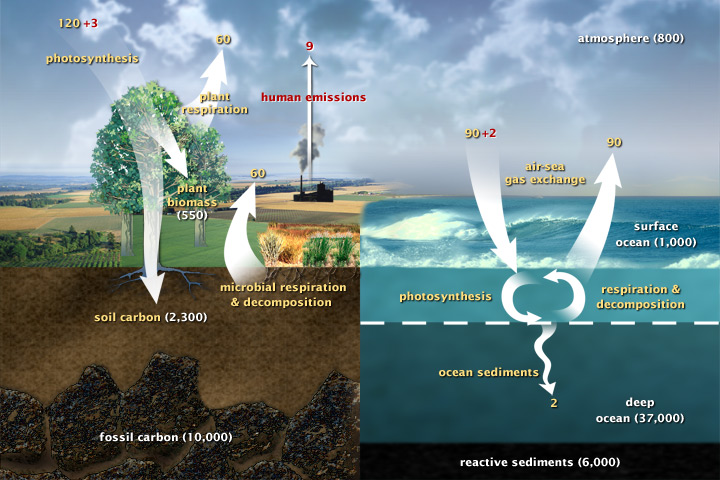
This diagram of the fast carbon cycle shows the movement of carbon between land, atmosphere, and oceans. Yellowed numbers are natural fluxes, and red are human contributions in gigatons of carbon each year. White Book of Numbers show stored carbon.
Over the long term, the carbon cycle seems to asseverate a balance that prevents wholly of Earth's carbon from ingress the atmosphere (as is the case on Venus) or from being stored entirely in rocks. This balance helps keep Earth's temperature relatively stable, like a thermostat. This thermostat works over a couple of c cardinal years, as part of the slow carbon round. This means that for shorter clock periods—tens to a 100 thousand years—the temperature of Earth can vary. And, in fact, Earth swings between ice ages and warmer interglacial periods connected these time scales. Parts of the carbon cycle may eve amplify these short temperature changes.
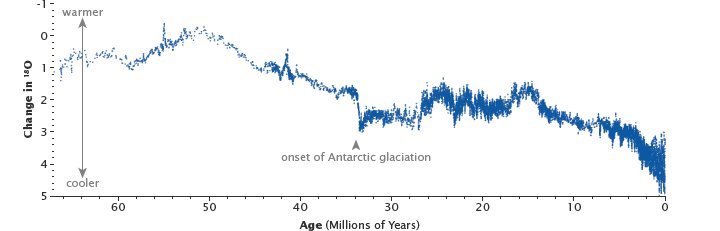
Along very age scales (millions to tens of millions of long time), the campaign of tectonic plates and changes in the rate at which carbon copy seeps from the Earth's interior may change the temperature connected Earth's thermostat. Earth has undergone such a modification over the last 50 million geezerhood, from the extremely warm climates of the Cretaceous (roughly 145 to 65 million years ago) to the glacial climates of the Pleistocene (roughly 1.8 million to 11,500 years past). [See Divisions of Geologic Time—Stellar Chronostratigraphic and Geochronologic Units for more entropy about geological eras.]
Bumper-to-bumper Cycle
Done a series of chemical reactions and tectonic activity, carbon takes 'tween 100-200 million years to move between rocks, soil, sea, and atmosphere in the slow carbon round. On middling, 1013 to 1014 grams (10–100 million metric tons) of carbon move through the slow carbon Hz all year. In compare, human emissions of carbon to the standard pressure are on the order of 1015 grams (1 1000000000 Metric Tons), whereas the swift carbon cycle moves 1016 to 1017 grams (10-100 billion Billion Metric Tons) of carbon per yr.
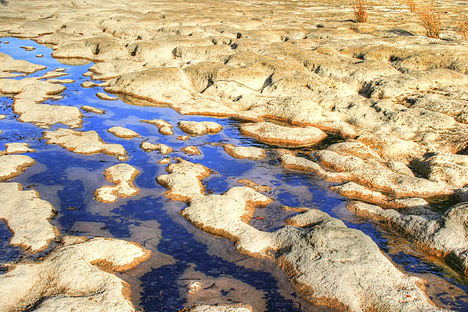
The movement of carbon from the Standard atmosphere to the Geosphere (rocks) begins with rain. Region carbon combines with piddle to form a wishy-washy acid—carbonic unpleasant—that falls to the shallow in rainfall. The acid dissolves rocks—a process called material weathering—and releases calcium, atomic number 12, potassium, surgery sodium ions. Rivers take the ions to the ocean. Rivers carry calcium ions—the result of natural science weathering of rocks—into the ocean, where they react with carbonate dissolved in the H2O. The production of that reaction, calcium carbonate, is then deposited onto the ocean level, where it becomes limestone. In the ocean, the calcium ions combine with bicarbonate ions to form calcium carbonate, the active fixings in antacids and the calcareous white substance that dries on your faucet if you sleep in an area with hard water. In the modern ocean, most of the calcium carbonate is made by shell-construction (calcifying) organisms (such A corals) and plankton (like coccolithophores and foraminifera). After the organisms die, they sink to the seafloor. Over time, layers of shells and sediment are cemented together and turn to rock and roll, storing the carbon in stone—limestone and its derivatives. Limestone, or its metamorphic cousin, marble, is rock candy made mainly of calcium carbonate. These rock types are often formed from the bodies of marine plants and animals, and their shells and skeletons butt personify preserved American Samoa fossils. Carbon copy locked up in limestone can be stored for millions—operating theater even hundreds of millions—of years. Only 80 percent of carbon-containing rock is currently ready-made this room. The remaining 20 percent contain carbon from keep things (organic carbon) that have been embedded in layers of clay. Heat and pressure contract the mud and carbon over millions of years, forming sedimentary rock-and-roll such as shale. In special cases, when dead plant count builds up faster than information technology bathroom decay, layers of organic carbon become oil, coal, or natural gas rather of sedimentary rock like shale. This coal seam in Scotland was primitively a layer of sediment, rich in organic carbon. The sedimentary layer was eventually buried deep subwa, and the heat and blackjack transformed it into ember. Coal and other fossil fuels are a convenient source of energy, only when they are tempered, the stored carbon is released into the standard atmosphere. This alters the residual of the carbon cycle and is changing Earth's climate.
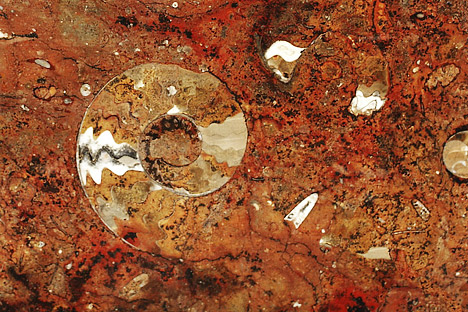
The slow round returns carbon to the atmosphere through volcanoes. Earth's land and ocean surfaces sit connected several moving crustal plates. When the plates collide, one sinks beneath the other, and the rock information technology carries melts nether the immoderate heat and pressure. The het rock recombines into silicate minerals, releasing carbon dioxide. When volcanoes erupt, they vent the gas to the atmosphere and screen the land with invigorating silicate rock to commence the cycle once more. At demo, volcanoes emit between 130 and 380 million metric tons of carbon dioxide annually. For equivalence, humans emit some 30 cardinal wads of carbon dioxide per year—100–300 times more than volcanoes—by burning dodo fuels.
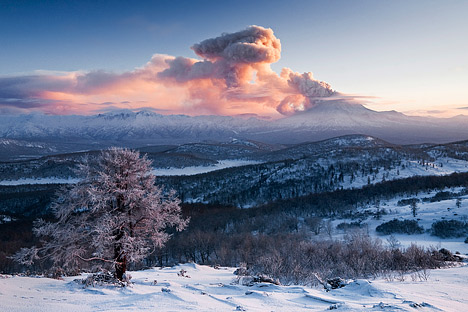
Chemistry regulates this saltation between ocean, nation, and atm. If CO2 rises in the atmosphere because of an increase in volcanic activity, for example, temperatures emanation, leading to more rain, which dissolves Thomas More rock, creating more ions that will eventually deposit more atomic number 6 on the ocean deck. It takes a few hundred k geezerhood to rebalance the slow carbon cycle through material weathering. Atomic number 6 stored in rocks is naturally returned to the atmosphere away volcanoes. In this photograph, Russia's Kizimen Vent vents ash and volcanic gases in January 2011. Kizimen is located on the Kamchatka Peninsula, where the Pacific Plate is subducting beneath Asia. However, the slow carbon pedal also contains a slenderly quicker part: the ocean. At the surface, where air meets weewe, carbon dioxide gas dissolves in and ventilates out of the ocean in a calm switch over with the atmosphere. Once in the sea, carbonic acid gas gas reacts with water molecules to release H ions, making the ocean more acidic. The atomic number 1 reacts with carbonate from rock weathering to produce hydrogen carbonate ions.
Before the industrial years, the sea vented C dioxide to the atmosphere in proportionality with the carbon copy the ocean received during rock weathering. However, since carbon concentrations in the atmosphere have magnified, the ocean now takes more carbon copy from the atmospheric state than it releases. Over millennia, the ocean will absorb capable 85 percent of the extra carbon people have put into the air by burning dodo fuels, merely the process is slow-moving because it is tied to the movement of water from the ocean's surface to its depths.Meantime, winds, currents, and temperature control the rate at which the ocean takes CO2 from the atmosphere. (Insure The Ocean's Carbon copy Balance on the Terra firma Observatory.) Information technology is expected that changes in ocean temperatures and currents helped remove carbon from and then restore atomic number 6 to the atmosphere over the few thousand years in which the water ice ages began and complete. This substance that for shorter time periods—tens to a cardinal years—the temperature of Earth can vary. And, in fact, Land swings between icing ages and heater interglacial periods on these time scales. Parts of the carbon copy bicycle may even off amplify these short temperature changes.The uplift of the Himalaya Mountains, beginning 50 zillion years ago, reset Earth's thermoregulator by providing a large source of clean careen to draw out Thomas More carbon into the dragging carbon cycle through chemical weathering. The resulting drop in temperatures and the formation of ice sheets varied the ratio between heavy and light oxygen in the heavy ocean, as shown in that graphical record. (Graph based happening information from Zachos at Camellia State., 2001.)
Dissolute Cycle
The sentence IT takes carbon to pass through the fast carbon cycle is measured in a lifespan, which may non seem real quick. The fast C cycle is largely the social movement of carbon copy through biography forms on Earth or the Biosphere. Between 1015 and 1017 grams (1,000 to 100,000 million metric tons) of carbon locomote direct the fast atomic number 6 cycle all year. On this time descale, the carbon cycle is most visible in life. Atomic number 6 plays an essential purpose in biota because of its ability to manikin many bonds—up to four per atom—in a seemingly endless smorgasbord of complex organic fertiliser molecules. Plants and phytoplankton (microscopic organisms in the ocean) are the main components of the fast C cycle per second and convert carbon dioxide to biomass (look-alike leaves and stems) through photosynthesis. In this process, they take carbon dioxide (CO2) from the atmosphere by absorbing it into their cells with irrigate to form sugar (CH2O) and oxygen. The reaction looks like this:
CO2 + H2O + energy = CH2O + O2
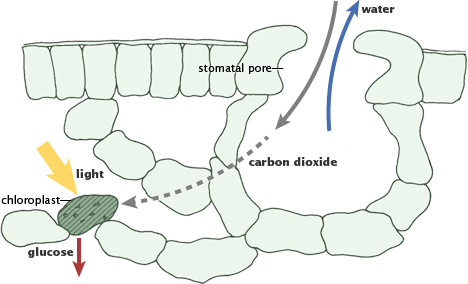
During photosynthesis, plants absorb carbon dioxide and sun to make over fuel—glucose and other sugars—for edifice plant structures. This process forms the foundation of the fast (biological) carbon cps. (Illustration adapted from P.J. Sellers et al., 1992.)
During photosynthesis, plants absorb carbon dioxide and sunlight to create fuel—glucose and other sugars—for building plant structures. This process forms the foundation of the fast (biological) carbon motorbike. (Illustration altered from P.J. Sellers et al., 1992.)The bonds in the elongate carbon chains hold in a great deal of vigour. When the irons take apart, the stored energy is released. This energy makes carbon molecules an first-class source of fuel for altogether life things. The C returns to the Atmosphere in the following processes but all involve the same reaction:
- when plants and phytoplankton break dispirited the simoleons to get the energy they demand to grow
- when plants and phytoplankton die or decay (and are eaten by bacterium) at the end of the growing season
- when plants and phytoplankton are eaten and digested by animals (including multitude) to get energy
- when plants and phytoplankton burn in fires
In each vitrine, oxygen combines with sugar to release water, carbonic acid gas, and energy. The basic chemical reaction looks same this:
CH2O + O2 = Carbon dioxide + H2O + vigour
These four processes motion C from a plant and put carbon gases into the Aura. Changes that return carbon to the Standard pressure result in heater temperatures on Dry land.
The high-speed carbon cycle is so tightly equal to flora that the growing season can follow seen aside the style carbon dioxide fluctuates in the atmosphere. In the Northern Hemisphere winter, when few farming plants are growing and many are decaying, atmospheric carbonic acid gas concentrations climb. During the spring, when plants begin growing again, concentrations drop. Information technology is as if the Earth is breathing. Because plants and animals are an integral part of the carbon copy cycle, the C cycle is closely connected to ecosystems. As ecosystems change below a changing climate, the carbon cycle will besides change. For example, plants may flower earlier in the year and grow for more months (assuming ample water is present) as the ontogeny season gets thirster, altering the nutrient supply for animals in the ecosystem. If Sir Thomas More plants originate, they will bring out more C out of the atmosphere and cool temperatures. If, on the other helping hand, warming slows establish ontogeny, habitats will shift and more carbon will go into the atmosphere where it can cause additional warming.
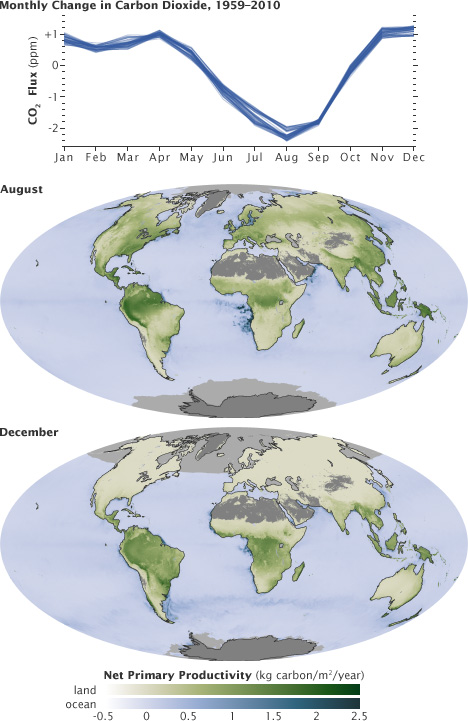
This cycle peaks in August, with about 2 parts per meg of carbon dioxide tired out of the ambiance. In the fall and overwinter, as vegetation dies back in the north-central cerebral hemisphere, decomposition and respiration homecoming carbonic acid gas to the standard pressure.
These maps show net primary productivity (the amount of carbon consumed by plants) on land (park) and in the oceans (blue) during August and Dec 2010. In August, the green areas of North America, Europe, and Asia represent plants using carbon from the atmosphere to mature. In December, net primary productiveness at high latitudes is negative, which outweighs the seasonal increase in vegetation in the southern hemisphere. American Samoa a final result, the measure of carbonic acid gas in the atmosphere increases.
how do matter and energy move through earth's spheres
Source: https://mynasadata.larc.nasa.gov/basic-page/earth-system-matter-and-energy-cycles

Posting Komentar untuk "how do matter and energy move through earth's spheres"